1 July 2026
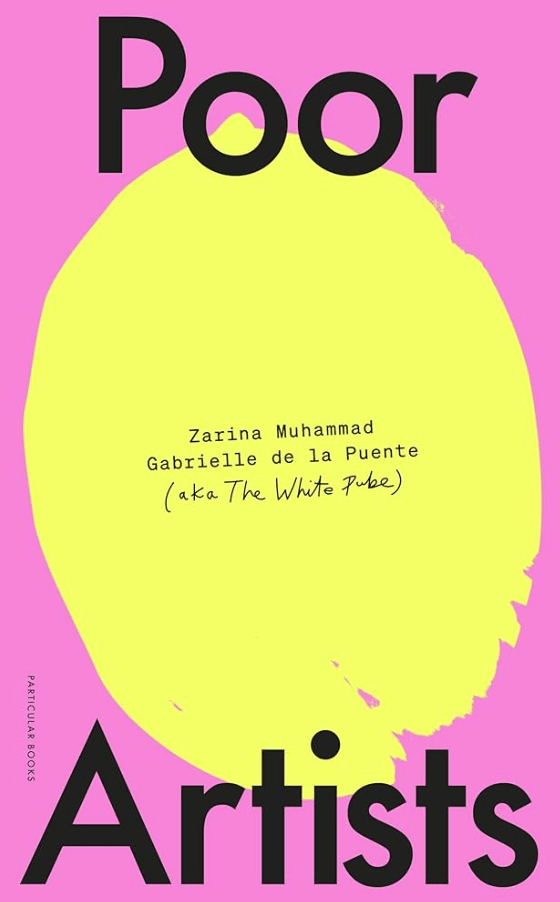
When I bought Poor Artist (Penguin Random House, 2024) I wasn’t 100% sure what I was buying. If I’m completely honest, I recognised the bright pink and neon yellow cover from an Instagram story posted months ago by someone I follow—an artist, curator, writer, one of those people I look up to as epitomes of intellectualism. Ever since, I’ve wanted a copy. QT, the alter ego of our protagonist Quest, would probably have been proud of my algorithmically induced consumerism. Or utterly despised me. Either way.
I have an anxious habit whenever I start a book, and that is to immediately turn to the last chapter. In this case, the acknowledgements. Here, Zarina Muhammad and Gabrielle de la Puente explain how they have kept ‘The White Pube’ alive since 2015, publishing a new piece of writing every Sunday, recording podcasts, building a Discord community that, as de la Puente mentions in an Instagram video, someone has even written their dissertation about. In the process, they have become one of the most distinctive voices in contemporary art criticism on the internet. Before meeting Quest, I was reminded that this novel emerges from years of thinking collectively about what it means to survive as an artist.
Quest Talukbar takes us from art school—the traumatic exit of the mother’s womb, aka graduation— into the reality of trying to exist as an artist. She and the other poor artists spend much of the novel asking the same question many of us have asked at some point: what the hell is actually going on in the art world? And why does the career ladder always seem to begin five feet above the ground?
The novel unfolds like a series of blog posts rather than conventional chapters. Half true, half invented, autofiction (probably?), Quest’s observations are funny, painfully recognisable and occasionally grotesque.
“The Art King” was perhaps the uncanniest chapter of the book. Cocktail parties, yachts, networking rituals that resemble religious ceremonies. “Artists aren´t priests and curators aren’t bishops”. No, but sometimes the art world behaves as though they are, and partially they do because we think of it as a sacred institution with moral responsibilities. Art critics belong to that hierarchy as butchers, perhaps?
Mo initially struck me as the archetypical, annoying “theory bro”—the kind of person who won’t let you leave the conversation until he’s convinced you’ll quote him the next time you mention Bataille. But, aren’t we all intense idealists? Convinced that things could simply be better were it not for the greedy technofascists currently steering the ship?
When Mo dies, the novel shifts register. I inevitably think about Hilde Lynn Helphenstein (Jerry Gagosian) and the openness with which she spoke about mental health (Forbes, October 2025) before she committed suicide; and about the lecturer in “The Q&A” who recalls losing a friend because he couldn’t imagine a life without making art. It turns into not how artists survive financially, but how they survive at all.
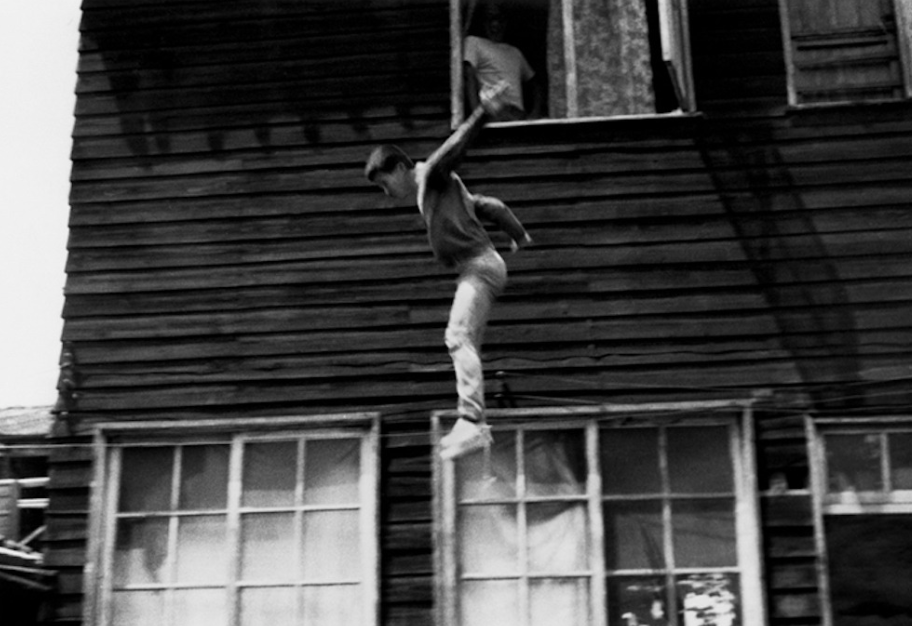
When Quest meets Mo at the art fair in LA, he talks about his obsession over Tehching Hsieh. Like Mo, I became slightly obsessed, too. His Jump Piece (1973), in which he leapt from a first-floor window and broke both ankles, for what I imagine was to mimic Yves Klein’s leap. But, then again, Klein’s famous leap was a photomontage, Hsieh’s wasn’t. Hsieh’s commitment to the arts is irrational.
Which inevitably made me think about funding applications. How exactly does one translate that kind of artistic necessity into the language of public funding? You promise impact, resilience, innovation, identity; you spend days producing the perfect application only to discover you’ve failed to convince an anonymous committee, often without ever learning why because “no feedback will be given to unsuccessful applications”.
Recently I listened to artist Rayitox speaking with Fernando Castro Flórez. Castro Flórez recalled a colleague who had received a million-euro European research grant to study failure. I laughed. Then I gagged a little.
I gagged harder when Quest returned to Liverpool convinced she had failed, wondering whether she should become a dental hygienist instead. The temptation of the proper job haunts the novel. Sheila, the last character presented, reduces her hours, rents a studio and chooses art. Quest believed that earning more money with QT would have eventually allowed her to make the work she really wants. Like many of us, she discovers that stable employment has a habit of expanding until it occupies everything. We can finally afford rent and plan mortgages, and it is hard to give this up.
We all need to reach a point where we have to choose to return to our desires, to look for the erotics. Mine came when someone congratulated me on a policy draft by saying, “This will look so good on your Administrator CV.” I wanted to die. That was my wake-up call.
I’m still transitioning. I can’t afford a high-speed train, but I can take a FlixBus.
What Poor Artist gave me was not another romantic myth of the starving artist—we can leave that to the nineteenth century and all the troubled geniuses out there— but permission to acknowledge that artistic lives are built from precarious jobs, failed applications, bad health, envy, friendship and an unreasonable insistence on choosing art despite the struggle.
The novel refuses the fantasy that art exists above everything else. Instead, it insists that making art happens alongside everything else. I kept thinking of Cinthia Marcelle’s A Conjunction of Factors, where making art is inseparable from the chaos, labour and injustice that surround it. The poor artist keeps going. No idea why. But they do.


Leave a comment