27 March 2026
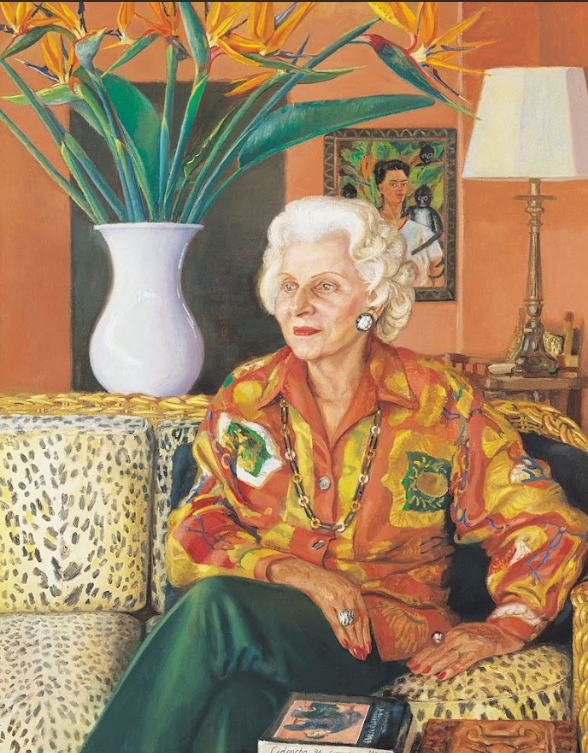
If the news that part of the Gelman Collection was to be auctioned off (Sotheby’s New York, November 2024) felt like a slap in the face,[1] then the press release issued by the Santander Foundation in January 2026 announcing its agreement with the Zambrano family to manage the collection «on a long-term basis, during which the collection will be renamed the Gelman Santander Collection»,[2] felt like a beating.
That same day, Mexico’s Ministry of Culture released a statement confirming the transaction, arguing that it was a private matter between the Zambrano family and the Santander Foundation. At the same time, the statement noted that both the Ministry and the National Institute of Fine Arts and Literature (INBAL) had accompanied the process and asserted that the latter would now be responsible for overseeing the works in Spain alongside the Santander Foundation—despite having failed to properly monitor the collection since the death of Natasha Gelman.[3]
Public opinion, along with professionals across the arts and cultural sectors, has responded from a range of positions. Yet there appears to be broad agreement on one extraordinary question: how is it possible that INBAL, the institution charged with safeguarding Mexico’s cultural heritage, neglected the oversight of one of the country’s most important twentieth-century art collections, including works by artists officially recognised as part of the nation’s cultural patrimony?
The legal disputes, procedural detours, and various forms of opacity that followed Gelman’s death—including the appointment of her trusted curator Robert R. Littman as executor of the estate—have been documented in detail by Judith Amador in her investigative report for Gatopardo.[4]
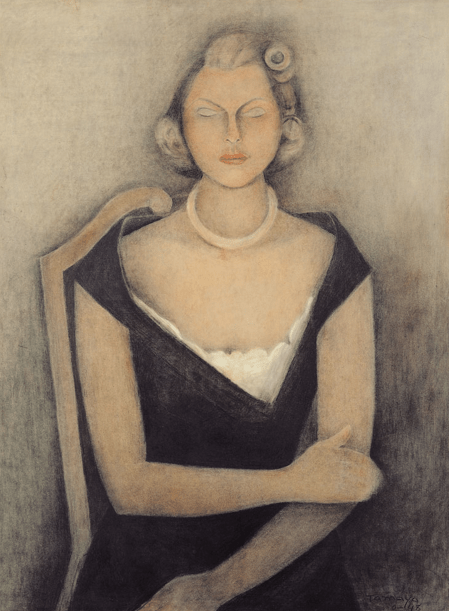
What is truly outrageous is that INBAL’s inaction—whether regarding the collection’s international circulation without passing through Mexico, the uncertainty surrounding its permanent destination, or the lack of transparency in its management—has culminated in its unexpected transfer to a Spanish banking institution: Santander. As a result, the collection will be relocated to Espacio Faro, a new cultural centre operated by the Santander Foundation, with no indication whatsoever that it will ever return to Mexico.
The Foundation’s website states that it is «committed to bringing culture closer to everyone».[5] Yet it is worth asking what exactly this “bringing closer” means. Cultural dissemination? Educational programmes? Publishing initiatives? What it undeniably involves is the displacement of artworks—from their place of origin into institutional circuits that capitalise on their symbolic and economic value.
Because the issue is not simply who exhibits culture, but from where and under what conditions. In this regard, the slogan «culture belongs to us all», in this case, begins to reveal troubling cracks. It recalls the museological logics that have historically legitimised the concentration and reappropriation of cultural heritage in certain institutions. Only now, it comes with the addition of a brazen second surname: the Gelman Santander Collection.
This concern becomes even more pressing when we consider the observations of Pablo Arredondo Vera. Alongside BBVA, Banco Santander has operated since the 1990s as one of the most “reliable” international alternatives to Mexico’s domestic banking sector, while charging significantly higher fees than it does in Spain. The relationship between these financial practices and the acquisition of cultural heritage is hardly incidental. What we are witnessing is a transfer of patrimony under unequal conditions produced by colonial histories.[6] It is precisely here that a neocolonial reading becomes relevant. Following Enrique Dussel, the notion of a «postcoloniality» understood as a break with the colonial order is untenable: structures of domination do not disappear: they mutate and reproduce themselves under new forms.
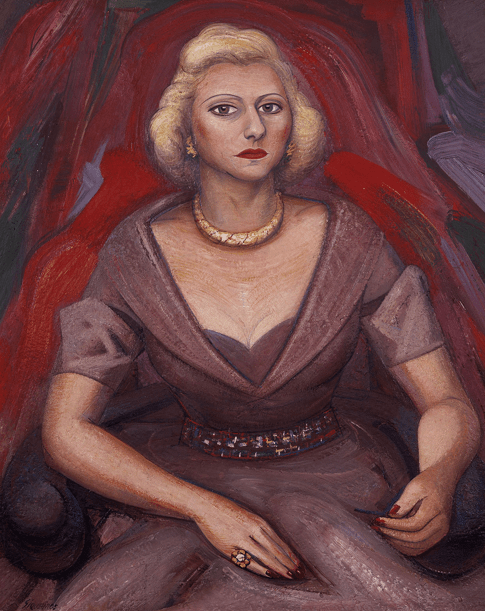
Arredondo raises another fundamental point: while the Kingdom of Spain increasingly adopts a rhetoric of recognition regarding its colonial past, it continues to permit the displacement of cultural heritage. This is not necessarily a matter of direct legal responsibility; it is a political and symbolic issue that cannot be ignored. And what will the Kingdom of Spain do? Celebrate it.
This tension is evident in the speech delivered by Spain’s Minister of Foreign Affairs, José Manuel Albares, in October 2025 on the occasion of the exhibition “La mitad del mundo. La mujer en el México indígena”. In his remarks, Albares spoke of «regretting» the colonial past, describing it as a «deeply human story, with its lights and shadows». The statement was remarkably vague. By resorting to expressions such as «lights and shadows» or «a deeply human story», it generated an irritating ambiguity. One is left wondering whether this is a cynical attempt to frame colonialism as something simply «human», or, in the worst-case scenario, a hollow apology in which no one is actually sorry for anything.
This supposed apology—ostensibly a response to the demands first made by Andrés Manuel López Obrador and later reiterated by Claudia Sheinbaum for an official apology from the Spanish Crown, which the King refused to offer—feels more like a mockery.
Yet what interests me is not so much the content of Albares’s speech as the narrative it produces. Its rhetoric resonates with certain contemporary curatorial tendencies, what Rahel Aima has described as «vaporwave curating»[7]: ostensibly neutral, risk-averse curatorial forms that privilege a conciliatory aesthetic, morally acceptable, but politically toothless. In attempting to please everyone, these discourses end up satisfying no one, a phenomenon we encounter constantly in the world of contemporary biennials, which Aima has dubbed «emotional support biennials».

Beyond being repetitive and tedious, the problem with this kind of lukewarm rhetoric is that it creates a cloudy atmosphere in which operations such as the displacement of cultural heritage come to appear normal, even inevitable.
As Mikaelah Drullard has argued, these gestures of moderation and symbolic recognition should not satisfy us.[8] In a world where figures such as Donald Trump openly shout in discourses of hatred and violence, an aesthetic of consensus,[9] filled with radical promises that never materialise, it’s not enough.
This brings us back to Arredondo’s central question: should a financial institution that profits from questionable practices in a given country also be entrusted with the management of that country’s cultural heritage?[10]
There is a certain irony in the fact that a Spanish bank should become the custodian of a collection containing works by Frida Kahlo, Diego Rivera, and others—artists whose political and artistic projects were profoundly antagonistic to capital. Yet the art market has repeatedly demonstrated that such contradictions are not contradictions at all, in its ability to absorb and neutralise critical discourse. Put simply: art that historically aligned itself with left-wing political imaginaries tends to survive within structures sustained by powers historically associated with the right.
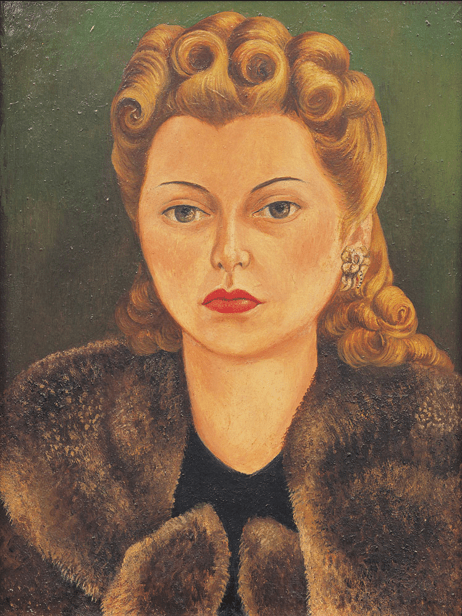
That said, it is worth remembering that great fortunes, such as that of the Gelman’s, have long played a crucial role in supporting the arts. Collectors have been, and continue to be, indispensable actors within the art system. Collecting, in itself, is not the problem. What is troubling, what should make the hairs on the back of our necks stand up, is the abdication of responsibility by public institutions whose mandate is precisely to safeguard and mediate cultural heritage.
The question is not who owns the collection, but how it became possible for it to end up in Santander’s hands. Unfortunately, amid this institutional lethargy, the market was left to operate unchecked, and greed’s roulette wheel happened to stop at the Botín family.
Here one is reminded of the art critic Raquel Tibol’s remark: «The selfishness of the rich has reasons that the culture of the many cannot comprehend».[11]
Art and culture have become, in the end, the sophisticated battlegrounds of new forms of barbarism—the very forms they are supposedly meant to protect us against. Pier Paolo Pasolini anticipated as much, a warning later revisited by Georges Didi-Huberman in the preface to Survival of the Fireflies, which today it resonates as a dreadful «I told you so». Alain Brossat captures the predicament succinctly: «Culture is no longer that which defends us against barbarism and must itself be defended from it; it is the very medium in which the intelligent forms of the new barbarism flourish».[12] The fate of the Gelman Collection is merely one more symptom of this process.
Translated into English by the author. Originally written in Spanish and published by HARTES.
[1] Judith Amador, “La Colección Gelman: el tesoro que México simplemente dejó ir”, Gatopardo, 12 May 2025.
[2] Fundación Santander, Santander gestionará la Colección Gelman, una de las más relevantes del arte mexicano del siglo XX [press note], Madrid, 21 January 2026.
[3] Secretaría de Cultura, Tarjeta informativa Colección Gelman Santander [government bulletin], México, 21 de enero de 2026.
[4] Amador, “La Colección Gelman”.
[5] Fundación Banca Santander, Cultura [webpage], accessed on 12 March 2026.
[6] Pablo Arredondo Vera, “La Colección Gelman: alianza extractiva entre el Estado mexicano y bancos españoles”, Arteinformado, 24 March 2026.
[7] Rahel Aima, “The Rise of Vaporwave Curating”, Frieze, 21 July 2025.
[8] Informed by Mikaelah Drullard videoessays posted on her Instagram @mikaelahdrullard
[9] Cem A. “Consensus Aesthetics: The Political Economy of Agreement in Contemporary Art”, Ibraaz, 12 January 2026.
[10] A few years ago, there was a Banco Santander branch near my home that I passed every day on my way to the metro. At some point in the 2010s, someone spray-painted over the first “n” and the final “-der” of the Santander logo in red, leaving only the word “Satan” visible. The intervention survived long enough for the branch to close before it was eventually removed. At the time, I thought it was an ingenious piece of mischief. I still do.
[11] Trad. Original: «El egoísmo de los ricos tiene razones que la cultura de los muchos no comprende». Raquel Tibol (1990) in “La famosa colección Gelman: Aún muchas dudas”, Proceso, 14 June 2004.
[12] Trad. Original text: «la cultura no es ya lo que nos defiende de la barbarie y debe ser defendido contra ella, es ese medio mismo en el que prosperan las formas inteligentes de la nueva barbarie». Georges Didi-Huberman, (2009) Supervivencia de las luciérnagas, trad. Juan Calatrava, Abada Editores, 2012.


Leave a comment